


The San Antonio talent story employers should be watching Texas’ growth is reshaping workforce needs
By Debra Del Toro
As San Antonio’s economy grows more complex, the region’s workforce needs are changing just as quickly. Employers across technology, cybersecurity, health care, finance, manufacturing and public service are looking for graduates who bring not only technical expertise, but also the ability to communicate, adapt and solve problems across disciplines.
That demand is especially visible in San Antonio, home to more than 1,000 technology firms and one of the nation’s largest cybersecurity hubs. It is also where UT San Antonio is emerging as a model for how a public research university can help a city, region and state build the workforce needed for the economy ahead.
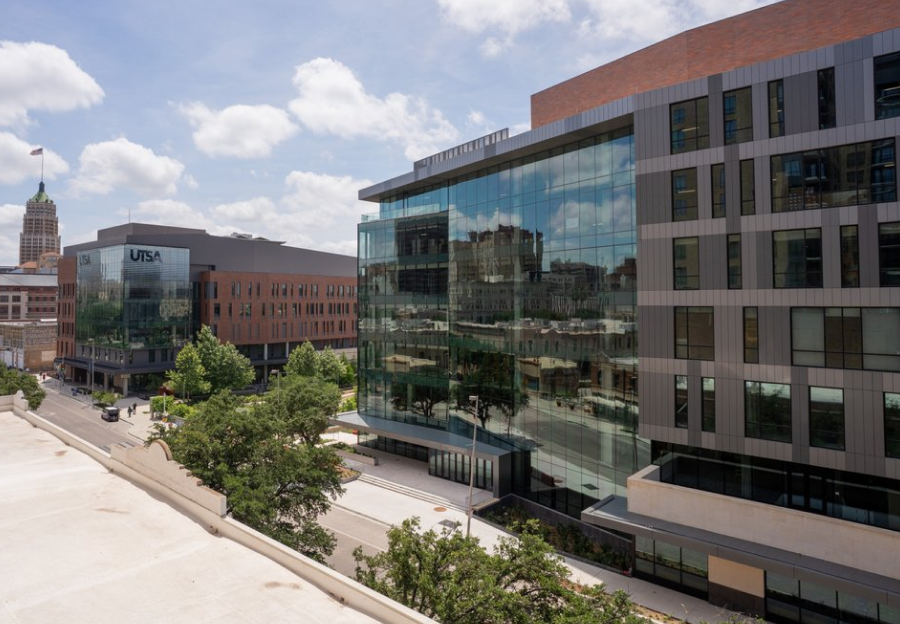
More than 42,000 students attend UT San Antonio. In recent years, the university has expanded experiential learning opportunities, launched the College of AI, Cyber and Computing, expanded its downtown footprint and integrated with UT Health Science Center San Antonio. Those efforts reflect a broader strategy to prepare students for careers in a rapidly changing economy.
Employers are also beginning to see their part in not only hiring talent but helping to build it. The companies that will have the strongest workforce in five or ten years won’t simply recruit more effectively. They’ll partner more intentionally with universities to shape how future employees learn, gain experience and prepare for careers before they ever submit a résumé.
“The future success of Texas depends heavily on public institutions that are committed to developing the talent required to grow the professional workforce pipeline and drive economic impact,” said UT San Antonio President Taylor Eighmy. “As a model public research university, UT San Antonio is committed to establishing and fostering relationships with local and regional employers to create mutually beneficial opportunities so that when our students graduate, they are well-prepared and well-connected to the most in-demand careers in their field of interest.”
Experience Is Becoming the Difference
When employers describe what separates one job candidate from another, the answer is often consistent: experience.
In San Antonio, companies such as USAA, H-E-B and Accenture Federal Services are already working directly with UT San Antonio through structured internship pipelines and recruiting partnerships, giving students exposure to real-world business challenges before graduation.
Over the past several years, UT San Antonio has made experiential learning an integral part of the student experience. Since 2022, the university has increased courses with embedded experiential learning opportunities by 85%, including internships, undergraduate research, study away, leadership training and service learning.
The value of those experiences isn’t limited to technical skills. Students learn to navigate uncertainty, communicate with teammates and clients, work in interdisciplinary teams and adjust when projects don’t go as expected.
The long-term impact is local.
Nearly 90% of UT San Antonio graduates establish their careers in Texas, meaning those investments remain in the state’s workforce and economy.
“Experience changes how students learn and how employers evaluate them,” said Provost and Senior Executive Vice President for Academic Affairs Heather Shipley. “When students graduate having worked with researchers, industry partners or community organizations, they enter the workforce with confidence, stronger professional judgment and a much clearer understanding of how to apply what they’ve learned.”
Preparing for Careers That Don’t Fit One Category
Many of today’s fastest-growing careers didn’t exist a decade ago.
Artificial intelligence now influences everything from health care to education and finance to public service. Data shapes decisions in organizations of every size. Cybersecurity has become a business concern rather than an IT issue.
UT San Antonio responded to that shift by launching the College of AI, Cyber and Computing last fall, bringing together related programs under one interdisciplinary college. Students study artificial intelligence, cybersecurity, computer and data science while learning how those fields connect across industries.
The college’s downtown location also places students close to technology companies, government agencies and nonprofit organizations that regularly partner with the university on internships, research and applied learning opportunities.
With UT Health San Antonio, the university is uniquely positioned to develop the workforce of the future, significantly expanding education, research and career pathways where health care and technology converge to meet rapidly growing talent needs across San Antonio, Texas and the nation.
Employers as Partners in Developing Talent
More companies are rethinking when and how they engage with future employees.
At UT San Antonio, employer involvement takes many forms. Companies such as Union Pacific, The Hartford and UnitedHealth Group engage with students through formal recruiting pipelines, mentorship, project-based learning or advisory roles.
Those partnerships create a feedback loop. Faculty gain direct insight into workforce expectations and students become familiar with professional environments long before they begin full-time careers.
The university’s Najim Center for Innovation and Career Advancement connects students with more than 70 industry and community partners annually. Since its launch five years ago, the center has helped more than 3,000 students grow their skills through hands-on learning experiences tied directly to industry needs.
“Students shouldn’t have to wait until graduation to begin building professional relationships,” said Senior Vice Provost for Student Success Tammy Wyatt. “Every internship, research project and employer partnership helps students connect what they’re learning in the classroom with the expectations they’ll encounter throughout their careers. Those experiences benefit students and they strengthen the workforce our region depends on.”
Innovation That Extends Beyond the Classroom
Graduating a highly skilled workforce is only one way a research university contributes to the economy.
As an R1 research institution, UT San Antonio brings students, faculty and external partners together to work on society’s most pressing challenges.
On any given day, engineering students are solving problems alongside industry partners, cybersecurity students are working through live simulations and researchers are collaborating with clinicians just a few miles away across the university’s campuses.
Research attracts investment. It supports new companies. It strengthens existing industries. As the university’s downtown presence grows, more of those collaborations are happening within walking distance of one another.
Building the Workforce Together
Texas’ workforce needs will keep evolving.
Neither higher education nor industry can solve the workforce challenge alone. Universities educate students. Employers help shape the curriculum and identify the top skills needed to make those students ready to contribute. Companies that thrive over the next decade may not be the ones that recruit the best graduates — they’ll be the ones that help develop them.
Those partnerships are increasingly shaping academic program decisions across UT San Antonio. Preparing graduates for successful careers remains the immediate goal. Helping our region build the workforce that sustains Texas’ long-term economic growth is a larger one.